
Candidate Details
Report Summary
Strengths
• Explained a Microsoft Fabric project end to end: Lakehouse for raw and cleaned data, Warehouse for SQL reporting and Dataflows for light transformations.
• Described incremental, idempotent ETL/ELT pipelines with watermarks, retries and upserts, so reruns never lose or duplicate data.
• Showed practical PySpark tuning: broadcast joins, partition sizing, handling skew and reading the Spark UI to find slow stages.
• Wrote a correct SQL solution for deduplication, aggregation and top-N ranking, and explained each step clearly.
• Gave a clear picture of the medallion (bronze, silver, gold) lakehouse design and of Delta Lake's ACID guarantees.
Areas of improvement
• Core Python beyond PySpark (packaging, testing, typing) was not tested directly; a short Python exercise would confirm depth.
• Formal data modelling (star schemas, slowly changing dimensions) was covered only briefly and could be probed further.
• Data quality checks and governance were mentioned, but without a concrete framework or example from production.
Overall Summary
Ananya showed strong data engineering fundamentals and explained her approach in a structured, practical way, backed by examples from her own projects. She was confident with SQL, PySpark, pipeline design and lakehouse architecture, and handled follow-up questions well. Communication was clear throughout. Python depth and formal data modelling could be checked in the next round. Overall a good fit for the role. Recommended for the next round.
Skill Matrix vs Candidate Performance
Client's expected ratings compared to the candidate's interview score (0–10 scale).
Behavioral Skills
The below star ratings and skill-wise comments are generated with system assistance and should be read in conjunction with the interviewer's overall assessment.
Skill Matrix
The role's skill expectations defined by the company. Fields left blank were not specified.
| Skill | Years of Exp | Type of Exp | Proficiency | Expected Rating |
|---|---|---|---|---|
| Microsoft Fabric Mandatory | — | — | — | 7/10 |
| Databricks Mandatory | — | — | — | 7/10 |
| SQL - Advanced queries, performance tuning, data transformation (7/10 minimum) Mandatory | — | — | — | 7/10 |
| PySpark - Data transformation, joins, aggregations, optimization (7/10 minimum) Mandatory | — | — | — | 7/10 |
| Python Mandatory | — | — | — | 7/10 |
| ETL/ELT Pipeline Development Mandatory | — | — | — | 7/10 |
| Data Modeling & Schema Design Mandatory | — | — | — | 7/10 |
| Azure Data Factory (ADF) Mandatory | — | — | — | 7/10 |
| Data Lake / Lakehouse Architecture Mandatory | — | — | — | 7/10 |
Technical Skills
The below star ratings and skill-wise comments are generated with system assistance and should be read in conjunction with the interviewer's overall assessment.
Technical Skill Set · Mandatory
Described a Fabric project with Lakehouse, Warehouse and Dataflows, including when to use each, and how a medallion layout kept reporting data consistent. Also covered a real problem with incremental loads and how it was solved.
Outlined how she would set up a new Databricks workspace: Unity Catalog, Auto Loader for incremental ingestion and bronze/silver/gold jobs. Answers were correct but more general than specific, so rated at the expected level rather than above it.
Wrote a complete query that filters successful transactions, removes duplicates with ROW_NUMBER(), totals amounts per customer and ranks the top three with DENSE_RANK(). Explained WHERE vs HAVING, UNION vs UNION ALL and how to read an execution plan.
Discussed processing large datasets in PySpark: Parquet, partitioning, broadcast joins, the small-file problem and how to find skew in the Spark UI. Answers reflected hands-on tuning experience.
Python was mostly seen through PySpark work. General Python skills (testing, packaging, libraries) were not asked about directly, so the rating is based on indirect evidence.
Explained incremental pipelines with watermarks updated only after a successful load, retries and idempotent upserts. Clear grasp of orchestration and dependency handling.
Organised data well across bronze, silver and gold layers with sensible partitioning. Formal modelling techniques such as star schemas and SCDs were only touched on.
Named and explained the main Azure Data Factory components (pipelines, activities, datasets, linked services, integration runtimes and triggers) and how they fit together.
Showed a clear understanding of lakehouse architecture: data flowing from bronze to gold, storage on ADLS Gen2 and Delta Lake for ACID transactions and time travel.
You have a table called transactions with the columns transaction_id, customer_id, transaction_date, amount, status and updated_timestamp. A customer can have several transactions, and duplicate transaction records may exist.
Task: write a SQL query that
1. considers only SUCCESS transactions,
2. removes duplicate records, keeping the latest one by updated_timestamp,
3. totals the transaction amount for each customer, and
4. returns the top 3 customers by total amount.
Question 1
Can you walk us through a project where you used Microsoft Fabric, and the role of the Lakehouse, Warehouse and Dataflows in it?
Candidate Answer
Ananya described a retail analytics platform that brought sales and inventory data from several systems into Fabric. Raw files landed in the Lakehouse (bronze), were cleaned in silver and modelled in gold, with the Fabric Warehouse serving SQL reporting and Dataflows used for simple transformations.
Question 2
What are the main differences between a Fabric Lakehouse and a Fabric Warehouse, and when would you choose each?
Candidate Answer
She explained that the Lakehouse suits large, varied data and Spark processing, while the Warehouse suits structured data and SQL analytics. She would use both together: Lakehouse for engineering layers, Warehouse for reporting.
Question 3
Tell us about a challenge you faced on that project and how you solved it.
Candidate Answer
Daily incremental loads occasionally failed mid-run. She made the pipeline idempotent: the watermark is moved only after a successful load, and upserts (MERGE) prevent duplicates when a run is retried.
Question 4
Where do Dataflows fit in your ingestion and transformation approach?
Candidate Answer
Dataflows (Power Query) handle light, low-code clean-up such as removing duplicates and fixing nulls. Heavier or high-volume transformations go to PySpark notebooks, orchestrated by pipelines.
Question 5
Given a transactions table with duplicates, write a SQL query that keeps only successful transactions, removes duplicates keeping the latest record, totals the amount per customer and returns the top three customers.
Candidate Answer
She wrote a query using ROW_NUMBER() to keep the latest copy of each transaction, SUM() to total per customer and DENSE_RANK() to return the top three, filtering on status = 'SUCCESS' first. See the Coding Skills tab.
Question 6
Why did you use ROW_NUMBER() there instead of DISTINCT?
Candidate Answer
Because the duplicate rows are not identical: they differ in updated_timestamp. ROW_NUMBER() partitioned by transaction_id and ordered by updated_timestamp descending keeps exactly the latest version.
Question 7
How do you approach processing and transforming data in a distributed environment?
Candidate Answer
She uses PySpark on a cluster, stores data as partitioned Parquet or Delta, broadcasts small lookup tables to avoid shuffles and checks partition sizes so work is spread evenly.
Question 8
If you were starting a new project on Databricks, what would your first steps be?
Candidate Answer
Set up the workspace and Unity Catalog, connect the sources, use Auto Loader for incremental file ingestion and build bronze, silver and gold jobs with clear ownership and tests.
Question 9
What other managed Spark or distributed platforms have you worked with?
Candidate Answer
Azure Synapse Spark pools and Microsoft Fabric Spark, plus some Databricks in a proof of concept. She compared their cluster management and pricing briefly.
Question 10
What is the difference between WHERE and HAVING?
Candidate Answer
WHERE filters rows before aggregation; HAVING filters groups after aggregation. She gave an example of filtering customers whose total spend exceeds a threshold.
Question 11
What is the difference between UNION and UNION ALL?
Candidate Answer
UNION removes duplicate rows and is slower; UNION ALL keeps all rows and is faster when duplicates are not a concern.
Question 12
What is database tuning, and how would you approach it?
Candidate Answer
She gave a partial answer covering indexes and avoiding SELECT *, but did not discuss statistics, partitioning strategy or workload analysis.
Question 13
What is a query execution plan and how do you use it?
Candidate Answer
The optimiser's plan shows how a query will run: scans, joins, index use and estimated costs. She uses it to spot full scans and expensive joins before rewriting a query.
Question 14
How would you use Fabric Lakehouse and Warehouse together across the medallion layers?
Candidate Answer
Bronze and silver in the Lakehouse with Spark and Dataflows, gold tables exposed to the Warehouse for SQL and Power BI, and CDC or incremental pipelines to keep gold up to date.
Question 15
What are the main components of Azure Data Factory?
Candidate Answer
Pipelines, activities, datasets, linked services, integration runtimes and triggers, with a short explanation of what each one does.
Question 16
What is ADLS Gen2?
Candidate Answer
Azure's data-lake storage built on Blob Storage, with a hierarchical namespace and fine-grained ACLs, commonly used as the storage layer for lakehouse platforms.
Question 17
What is the small file problem, and how do you fix it?
Candidate Answer
Many small files slow down reads and overload metadata. She would compact them with coalesce/repartition or Delta OPTIMIZE, and choose sensible partition columns.
Question 18
What is Delta Lake?
Candidate Answer
An open table format on top of Parquet that adds ACID transactions, schema enforcement, MERGE/UPDATE support and time travel.
Question 19
A Spark job that used to take 20 minutes now takes two hours. How would you troubleshoot it?
Candidate Answer
Compare with a good run, check the Spark UI for skewed or spilling stages, look for new large joins that should be broadcast, check input size and partition counts, and only then consider a bigger cluster.
Question 20
How would you design a scalable Azure data platform from scratch?
Candidate Answer
Start from sources, volumes and reporting needs; land data in ADLS Gen2 or OneLake; build medallion layers with pipelines for orchestration and Spark for processing; serve gold data to Power BI and APIs, with security and monitoring designed in from the start.
Screenshot 1
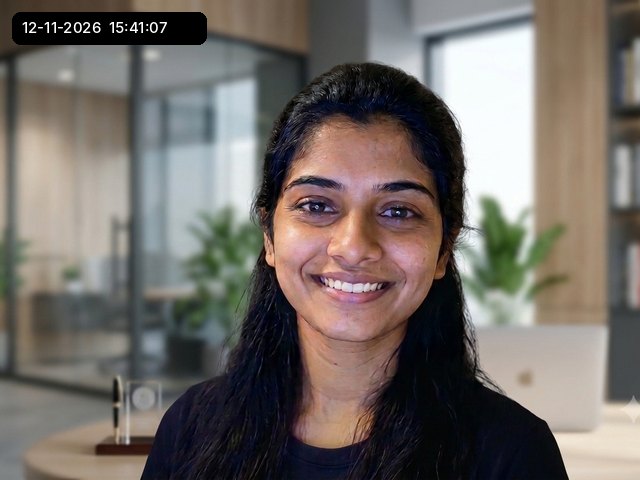
Ananya spoke clearly and kept her answers structured, even when the interviewer asked follow-ups mid-answer. She stayed calm, asked for clarification when a question was ambiguous and took feedback on the SQL exercise positively.